

To the extent that historical press releases reference BMW Manufacturing Co., LLC as the manufacturer of certain X model vehicles, the referenced vehicles are manufactured in South Carolina with a combination of U.S. origin and imported parts and components.
PressClub USA · Article.
CHAPTER THIRTY-TWO | “Upper Echelon: BMW Group revives Rolls-Royce Motor Cars for the modern era”.
Tue Aug 12 19:21:00 CEST 2025 Press Release
Of all the world’s automotive nameplates, none is more revered than that of Rolls-Royce. Since 1904, Rolls-Royce automobiles have occupied a class of their own where quality and elegance are concerned, and the Rolls-Royce name is virtually synonymous with luxury. For an automaker like BMW, a high-end marque like Rolls-Royce would constitute the perfect British bookend to the compact MINI, which it purchased as part of its 1994 acquisition of the Rover Group. As such, Rolls-Royce became an important target during the second phase of BMW’s expansion program of the 1990s.
Press Contact.
Thomas Plucinsky
BMW Group
Tel: +1-201-307-3701
send an e-mail
Author.
Thomas Plucinsky
BMW Group
Related Links.
Woodcliff Lake, NJ - August 11, 2025... Of all the
world’s automotive nameplates, none is more revered than that of
Rolls-Royce. Since 1904, Rolls-Royce automobiles have occupied a class
of their own where quality and elegance are concerned, and the
Rolls-Royce name is virtually synonymous with luxury. For an automaker
like BMW, a high-end marque like Rolls-Royce would constitute the
perfect British bookend to the compact MINI, which it purchased as
part of its 1994 acquisition of the Rover Group. As such, Rolls-Royce
became an important target during the second phase of BMW’s expansion
program of the 1990s.
Like nearly all automotive nameplates, Rolls-Royce was founded
by an inventive individual. Henry Royce built his first automobile in
Manchester, England in 1904, and two years later he was joined by a
partner, Charles Rolls. Royce’s firm became Rolls-Royce Ltd., which
began manufacturing airplane engines as well as automobiles in 1914,
when Great Britain entered World War I. In 1931, Rolls-Royce added to
its portfolio by buying the smaller Bentley automotive company, then
on the verge of bankruptcy during the Great Depression. Rolls-Royce’s
airplane engine business helped the company flourish during World War
II, and to acquire coachbuilders Park Ward and Mulliner shortly after
the war ended. Its prosperity wouldn’t survive the prolonged austerity
of the postwar period, however, and financial troubles saw Rolls-Royce
taken over by the British government in 1971. In 1980, the government
sold Rolls-Royce to Vickers PLC, a defense and industrial concern that
was otherwise uninvolved with the automobile business. As that
suggests, Vickers lacked the expertise or the resources needed to
modernize the cars sold under the Rolls-Royce or Bentley nameplates,
both of which it acquired in the same transaction.
As Tony Lewin reported in The Complete Book of BMW, BMW
offered to buy 20 percent of Rolls and Bentley in the early 1990s, but
Vickers wanted to sell the entire automotive operation. BMW remained
interested, however, and began sharing technology, components, and
testing facilities with Vickers. That collaboration resulted in the 5
Series-based 1994 Bentley Java concept and two 1998 automobiles: the
BMW V12-powered Rolls-Royce Silver Seraph and the BMW V8-powered
Bentley Arnage. Despite those ties, BMW almost lost out to Volkswagen
when Vickers sold both Rolls and Bentley to the Wolfsburg manufacturer
in 1998. Fortunately for BMW, Volkswagen failed to notice that the
Rolls-Royce brand name hadn’t been included in the €430 million sale.
The brand name, and the famous “RR” logo, belonged not to Vickers but
to a separate entity: Rolls-Royce PLC, a maker of aircraft engines and
a partner with BMW in the aerospace industry.
For £40 million, BMW licensed the rights to the Rolls-Royce name
and logo. Now the company could create its own all-new Rolls-Royce
automobile, a factory in which to build it, and a sales and
distribution organization to bring it to market.
To head its nascent Rolls-Royce organization, BMW tapped
Karl-Heinz Kalbfell, then Head of Worldwide Product Planning and
Strategy. Kalbfell was an Anglophile, and he wanted to create a
21st-century Rolls-Royce that would reflect the brand’s English
heritage. It was essential that such a car would be manufactured in
England, so Kalbfell contacted the Duke of Richmond about setting up a
new manufacturing facility on his 12,000-acre Goodwood estate, home of
the Goodwood Festival of Speed and the Goodwood Revival. The duke
agreed, and a factory was soon under construction on his land just
outside Chichester.
Since BMW couldn’t use the Rolls-Royce name until January 1,
2003, Kalbfell and his small team worked out of a secret office in the
City of London, augmented by engineers in Munich and Gaydon, home of
the Rover Group. (In early 2002, the highly-regarded Kalbfell left BMW
to run Alfa Romeo and Maserati, replaced by Tony Gott, who’d been CEO
of Rolls and Bentley during the Vickers era.)
BMW hadn’t acquired any of Rolls-Royce’s pre-existing
intellectual property such as engineering or design documents, leaving
the team free to create a truly new automobile. They gave the car an
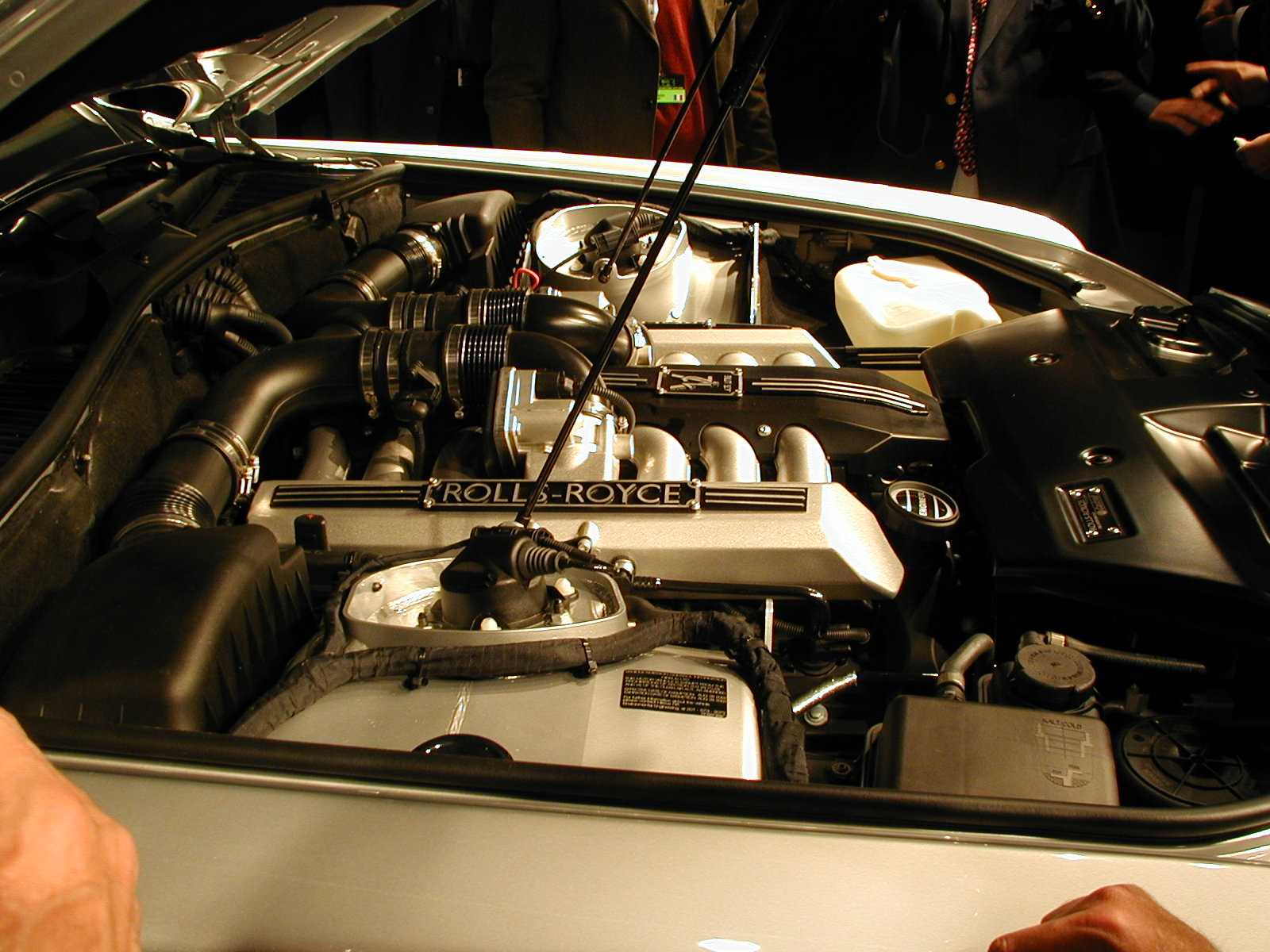
all-aluminum space frame, mated to a 6.75-liter BMW based V12 engine
with Rolls-specific tuning that favored torque over high horsepower.
In production form, the engine would deliver 453 horsepower at 531
pound-feet, with nearly 400 pound feet available from 1,000 rpm.
Rolls had never bodied its own cars prior to World War II, but
its vehicles had an unmistakable visual identity throughout the
company’s history. Much of that was conveyed by the upright “pantheon”
grille and Spirit of Ecstasy hood ornament, but neither of those
features had conveyed to BMW. That left designer Ian Cameron to draft
a new but still recognizable face for the car, which he did by
interpreting the grille with squarer, less upright proportions and
revising the Spirit of Ecstasy. Ingeniously, Cameron designed the
Spirit of Ecstasy to be more aerodynamic and somewhat smaller, and to
quickly retract in the event of a pedestrian collision. It can also
retract into the hood should someone attempt to steal or vandalize it.
Rolls-Royce had always been characterized by its stately
proportions, with a long wheelbase, long bonnet, and a roof height
double that of the very tall wheels and tires. The new Rolls-Royce
needed to retain those proportions, and it needed to be about twenty
percent larger than the average car, with “a sense of presence and
balance,” said Robert Austin. “It also needed an interior that was
warm, comfortable, and conducive to conversation, with only the finest
materials used on any surface you may see or touch.” Austin had
become Rolls-Royce’s North American Communications Director in
September 2002, recruited by President James Selwa. Though he’d
recently retired from a forty-year career at Volvo, he was intrigued
by the prospect of representing this venerable marque and came on
board with enthusiasm as Rolls-Royce was building its import and
distribution organizations in markets like North America. “We were
busy signing up new dealerships, most of which had previously been
Rolls-Royce dealerships,” Austin said. Rolls-Royce had sold just a
handful of cars in the US each year throughout the 1990s, but the
marque needed to attract a sizable number of potential customers who’d
be ready to buy once the new car was revealed. As with the car’s
design and engineering, all of that took place under strict secrecy.
“We set up three ‘closed rooms’ across the US. One was outside
Miami, another in Culver City, California, and the third in a
warehouse in Lyndhurst, New Jersey,” Austin said. “Each was located
inside an industrial building with no signage, just a number on the
door. In order to attend, a dealer had to propose your name and
accompany you to the viewing. Upon arrival, you’d be served coffee in
a nice reception area, and then you’d be taken into a room where you’d
see the story of Rolls-Royce. Finally, the lights would go out and we
would reveal the new Phantom, long before anyone had even seen a spy
photo of the car. It had a truly James Bond-like quality, and people
loved it.”
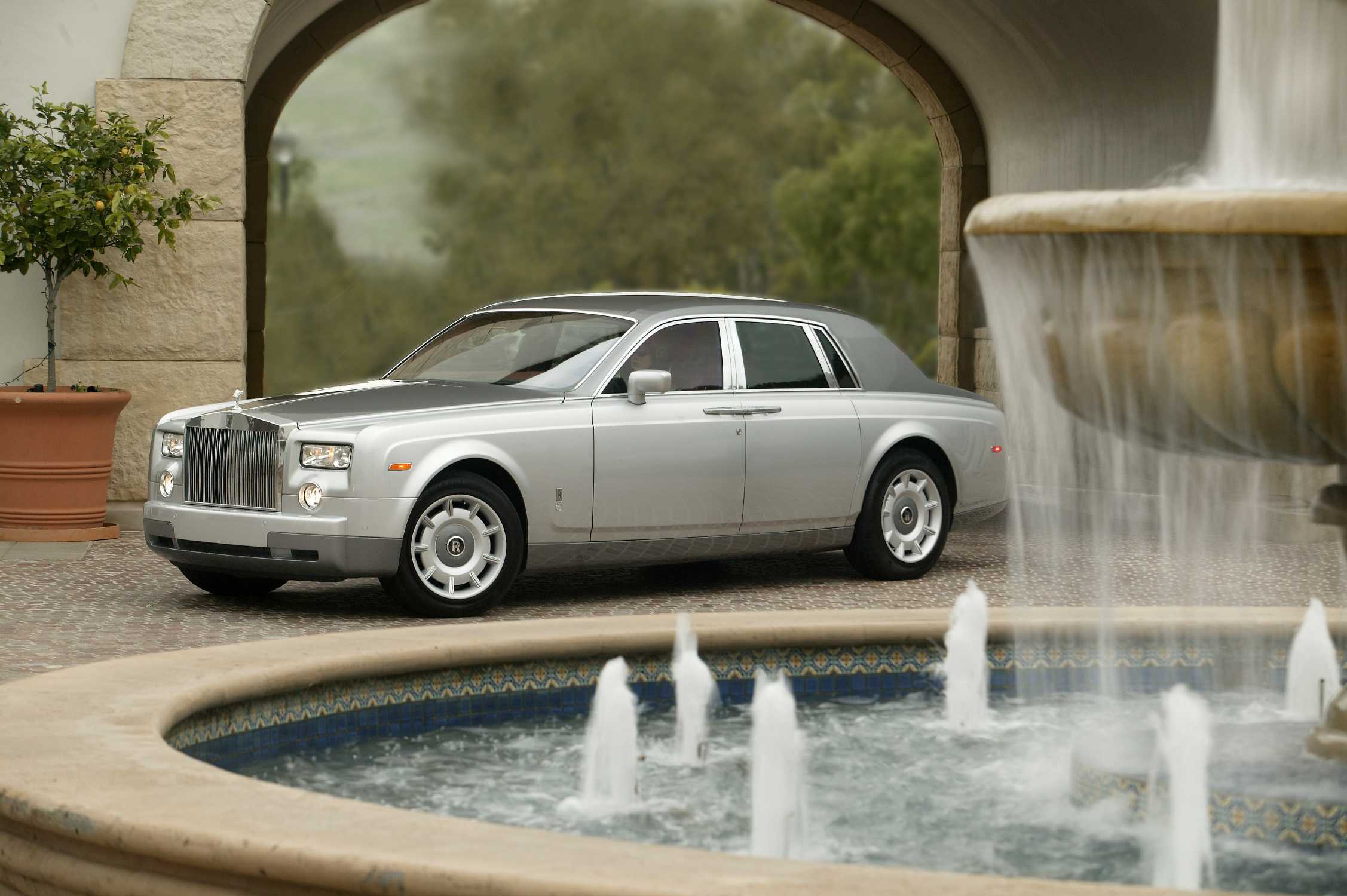
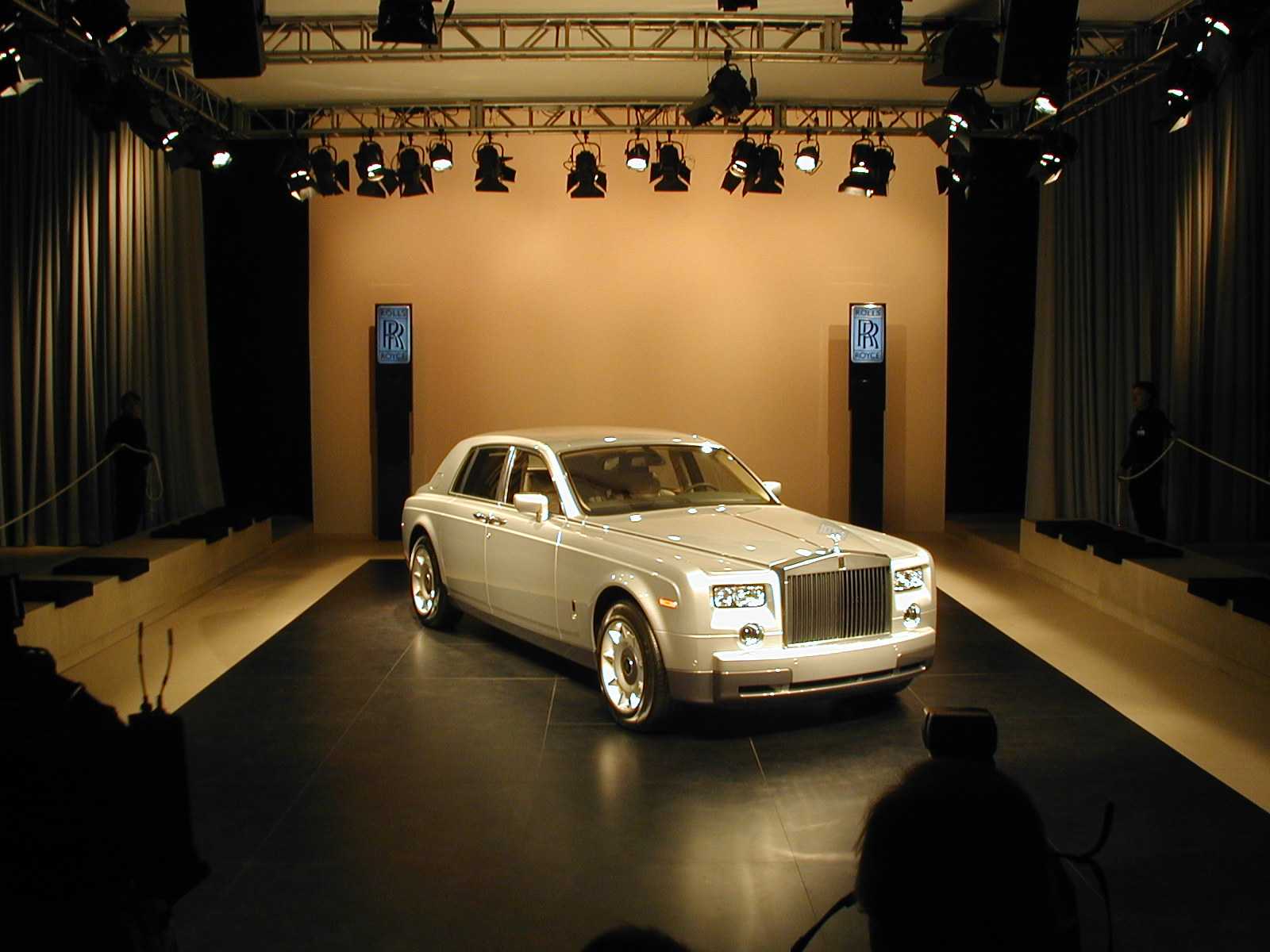
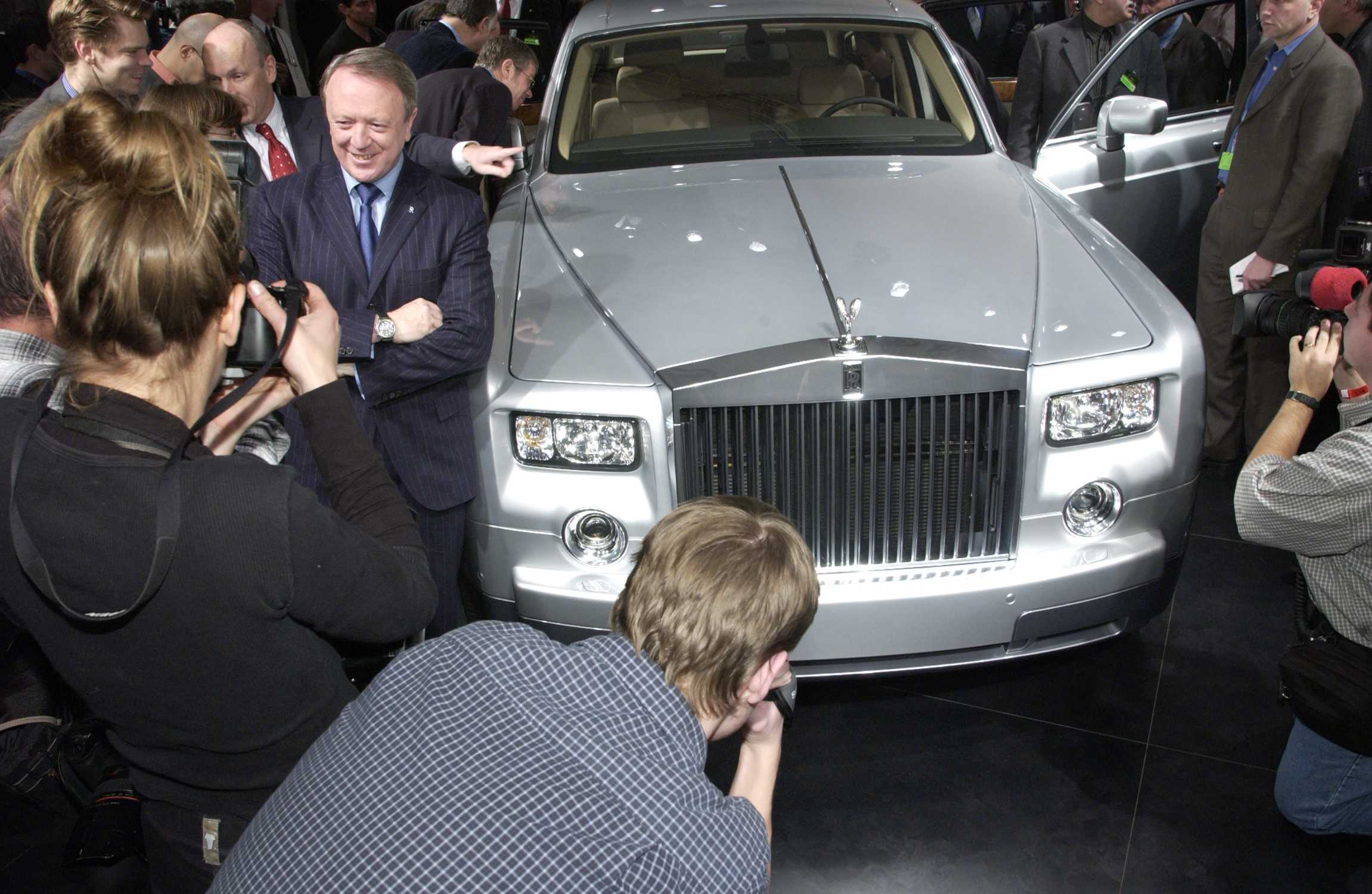
On January 6, 2003, the world got to see what the privileged
few had previewed. At the Detroit Auto Show, BMW unveiled the Phantom,
the first Rolls-Royce created under its ownership. “Most of the people
at the show were kind of awe-struck,” Austin said. “It was more than
they expected, physically overwhelming. But everyone had to admit that
the new Rolls-Royce was beautifully built and exquisitely finished.”
The same Detroit Auto Show had also seen the debut of Mercedes’
high-end Maybach limousine and Volkswagen’s sportier Bentley
Continental GT, but the Phantom stood out even against such
illustrious competition. Although it made a strong impression,
journalists gave mixed reviews of the $324,000 car. That was hardly
surprising, Austin said, as a 5,577-pound limousine wasn’t the sort of
car automotive journalists tend to favor. “It’s not why they took the
job, and they don’t meet the demographics of people who buy cars like
this. But if you owned a $12 million house [in 2003 dollars], if you
were the head of a company, or were in the entertainment business, or
if you simply wanted to buy ‘the best car in the world,’ you were a prospect.”
Each Phantom was—and remains—custom-built to its owner’s taste,
with a broad assortment of exterior colors, leathers, and woods
augmented by bespoke options that allowed customers to match any color
they liked, or to add custom touches like a coat of arms in
mother-of-pearl, monograms, etc. All of those options made the Phantom
a favorite among high earners in sports and entertainment, as well as
those in less visible fields. “You know why so many people in the
music business love Rolls-Royce cars?” Austin said. “Because it’s
virtually silent inside, and it’s got a killer audio system.” In
resurrecting Rolls-Royce, BMW had tapped into a burgeoning market for
ultra-luxury goods among the überultra-wealthy and their emulators. In
2003, its first year on the market, the Phantom was delivered to 481
customers worldwide, about half of whom were in the US.
In 2009, Rolls began offering the smaller, less expensive—but
still around $280,000—Ghost, conceived as an “everyday” Rolls for
those who kept a Phantom for special occasions. “Our owners typically
have a five- or six-car garage,” Cameron told The New York Times in
2004. “They think of the garage as a wardrobe. The Phantom might be a
tuxedo, and the 200EX [the concept car that became the Ghost] a
business suit. The tailor cuts the cloth the same way, but the suit is
different.” By expanding its model lineup, first with Ghost, then
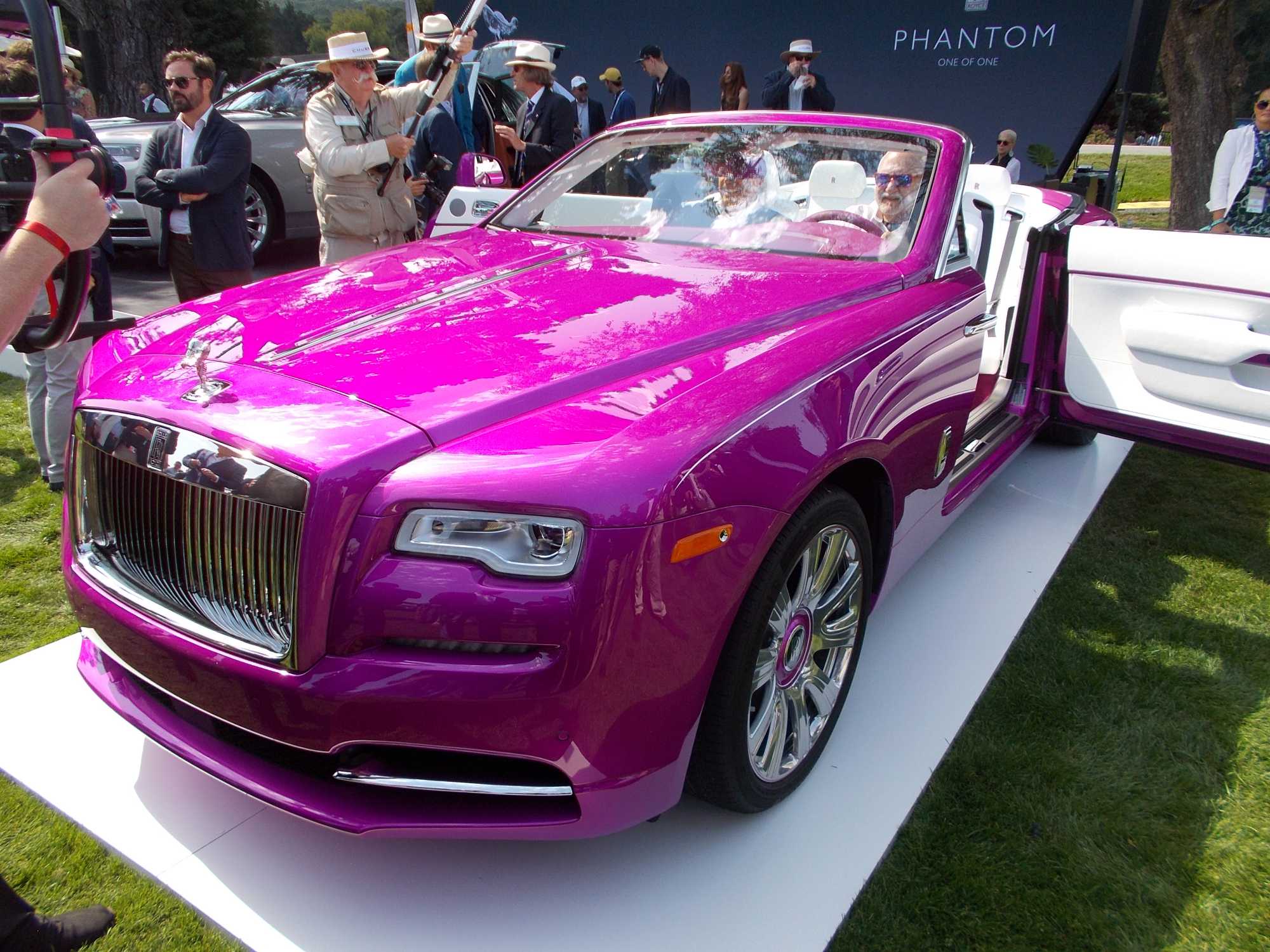
with Dawn, Wraith, Cullinan, and Spectre, Rolls-Royce expanded its
reach even though the brand didn’t advertise much. Instead,
Rolls-Royce brought its cars and potential customers together in
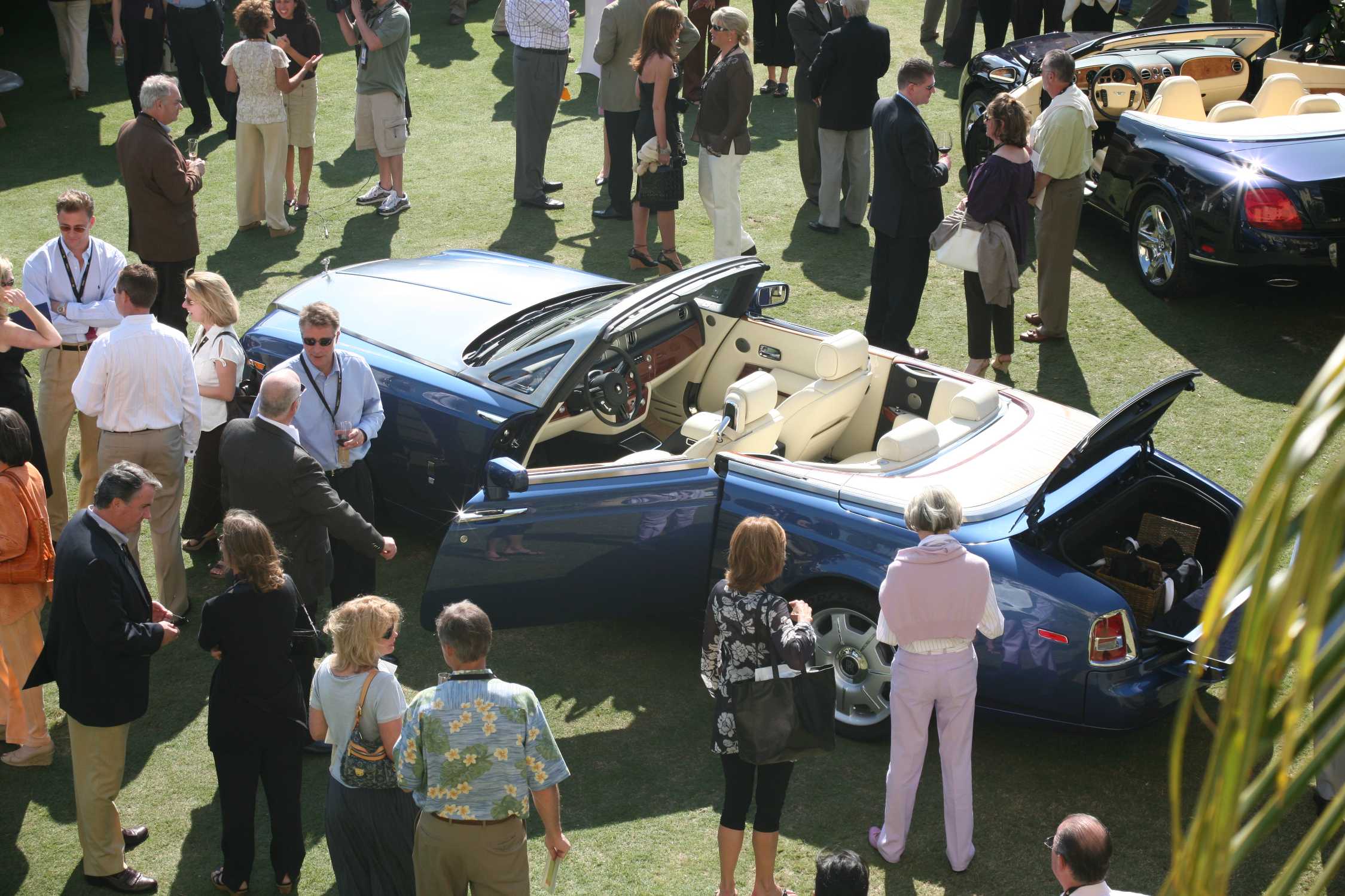
private homes or at events like the Pebble Beach Concours or The Quail
during Monterey car week. The company also hosted events at the
Goodwood Festival of Speed, not far from the factory where every Rolls
is built largely by hand. Sales have grown steadily since 2003,
barring a slight dip during the financial crisis of 2008-09. In 2023,
Rolls-Royce sold 6,032 cars worldwide, followed by 5,712 in 2024.
Along the way, Rolls-Royce’s business has changed, too,
according to Gerry Spahn, Head of Communications for Rolls-Royce Motor
Cars Americas. “The cars are more personalized than ever, and some are
even coachbuilt,” Spahn said, noting the spectacular Rolls-Royce Boat
Tail Coachbuild commission shown at Villa d’Este in 2021. “As a
result, pricing has risen from less than $300,000 per car to more than
$500,000 over the past decade.” Indeed, bespoke Rolls-Royce vehicles
can command a retail price in the millions of dollars. Many such cars
are configured at the Rolls-Royce’s new Atelier in New York City,
where prospective clients can pick out their cars’ finishes and
features in an appropriately high-end environment. In addition to that
fixed location, Rolls-Royce sets up a mobile Atelier at Pebble Beach
and other concours events where its customers are likely to gather.
Those customers are younger than ever, Spahn said, younger even than
those shopping for MINI or BMW vehicles. “Rolls-Royce is the youngest
brand in the BMW Group, with an average customer age of 43. That’s
down from around 60 fifteen years ago.” They’re increasingly North
American, too. Last year, about half of all Rolls-Royce cars were sold
on this continent, making it the largest market for the brand
worldwide. Like its MINI counterpart, Rolls-Royce has become an
essential component of the BMW Group’s strategy for success,
bookending the core BMW brand with high-end, individual automobiles.
“Our mission was to restore Rolls-Royce to its historic position at
the very pinnacle of the automotive pyramid,” Austin said, “and I
believe we succeeded.”